Helping Children Find Their Voice and Build Meaningful Communication
Communication is more than producing sounds correctly. It is how children express their needs, share their thoughts, connect with others, and participate in everyday life.
Some children have difficulty learning words or putting sentences together. Others understand what they want to say but struggle to produce speech clearly. Some need additional support to communicate through gestures, signs, or augmentative and alternative communication (AAC).
At Crossroads Therapy Clinic, we provide individualized speech and language therapy based on each child’s abilities, challenges, and communication needs.
We don’t begin with a predetermined program. We begin by understanding the child.
Speech and Language Challenges We Address
Speech Sound & Phonological Disorders
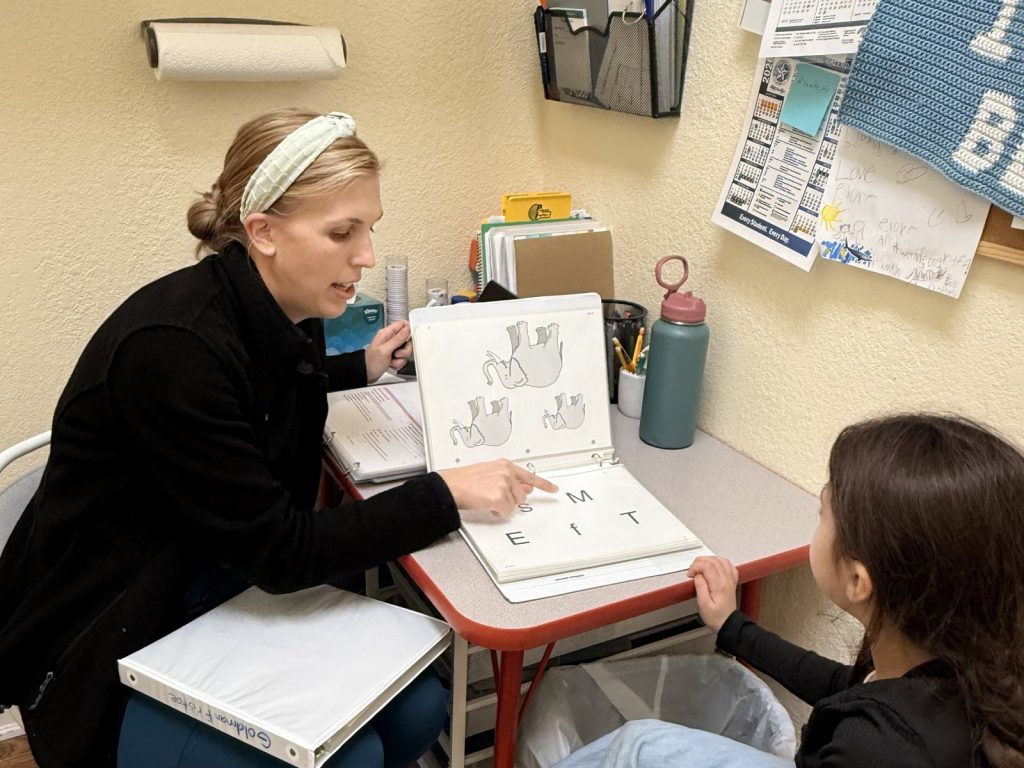
Some children have difficulty producing individual speech sounds, while others demonstrate patterns of sound errors that make their speech difficult to understand.
Therapy may focus on articulation, phonological patterns, speech clarity, and helping children use newly learned sounds in everyday communication.
Language Development & Language Disorders
Children may have difficulty understanding spoken language, learning vocabulary, combining words, forming sentences, answering questions, or expressing ideas.
We help children strengthen receptive and expressive language skills and develop more effective ways to communicate at home, at school, and in their communities.
Motor Speech Disorders
Some children know what they want to say but have difficulty planning, coordinating, or executing the movements needed for speech.
Our clinicians evaluate motor speech abilities and develop individualized treatment plans for children with childhood apraxia of speech, dysarthria, and other complex motor speech challenges.
Augmentative & Alternative Communication (AAC)
Not every child communicates most effectively through spoken words.
AAC may include gestures, signs, pictures, communication boards, or speech-generating devices.
We support children in developing functional communication using the methods that best meet their needs. AAC can be used alongside speech therapy and does not require a child to stop working toward spoken communication.
Orofacial Myofunctional Disorders
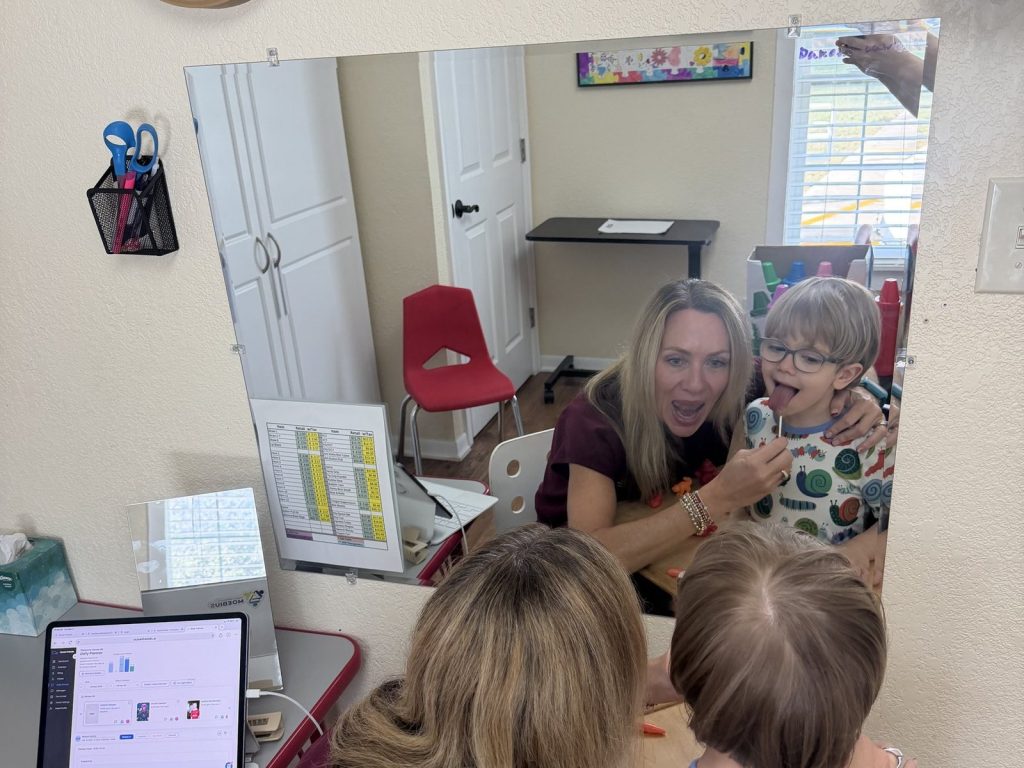
The way the lips, tongue, and jaw function can influence oral resting posture, swallowing patterns, and some aspects of speech production.
We evaluate and treat appropriate orofacial myofunctional concerns, including tongue thrust patterns and oral function challenges, while collaborating with dental, orthodontic, medical, and other professionals when needed.
Looking Beyond the Diagnosis
Two children with the same diagnosis may have very different abilities and treatment needs.
At Crossroads, our evaluations help us understand not only which skills are difficult, but why a child may be struggling.
We consider speech sound production, language development, motor planning and coordination, oral function, learning, participation, and the supports that help a child communicate successfully.
Our goal is to identify a meaningful starting point and develop treatment that builds upon the child’s existing abilities.
Individualized Therapy That Builds Toward Everyday Communication
Effective therapy is more than practicing a skill during an appointment.
We select treatment activities based on the child’s needs, monitor progress, adjust support, and work toward using newly acquired skills in everyday situations.
Families are an important part of this process. We help parents understand what their child is learning and how to support communication between therapy sessions.
Therapy is where we teach the skill.
Everyday practice is where we help it grow.
Related Services
Feeding Therapy
Some children with speech and language challenges also experience difficulties with feeding, chewing, swallowing, or oral function.
Explore Feeding Therapy →Occupational Therapy
Children may also benefit from occupational therapy when sensory processing, motor coordination, self-care, or participation challenges affect everyday activities.
Explore Occupational Therapy →