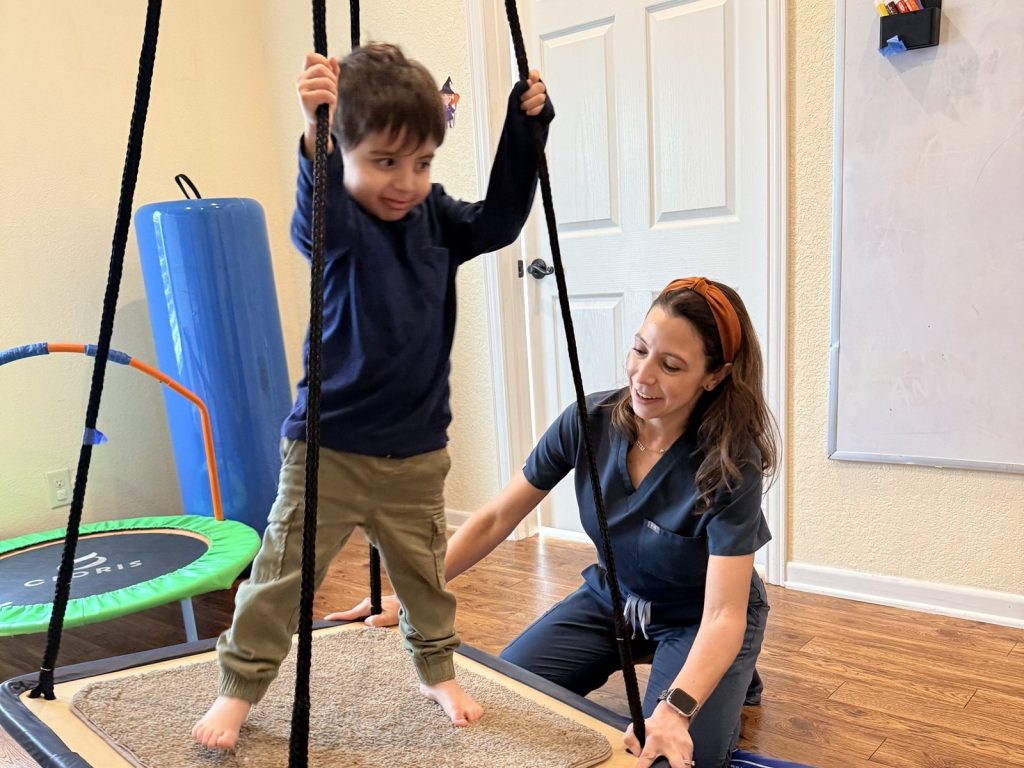
Helping Children Build the Skills for Everyday Life
Everyday activities such as playing, getting dressed, eating, writing, and participating in family routines require many skills working together.
For some children, challenges with sensory processing, motor coordination, body awareness, regulation, or fine motor development can make these activities more difficult than expected.
At Crossroads Therapy Clinic, our occupational therapists look beyond the activity a child is struggling with to understand the underlying skills that may be affecting their ability to participate successfully.
We recognize that children develop differently and that no single approach works for every child. Our therapists use their clinical experience, specialized training, and individualized assessment to determine where support is needed and how to help each child build meaningful, functional skills.
Our goal is not simply to help children perform a task in therapy. It’s to help them participate more confidently and independently in everyday life.
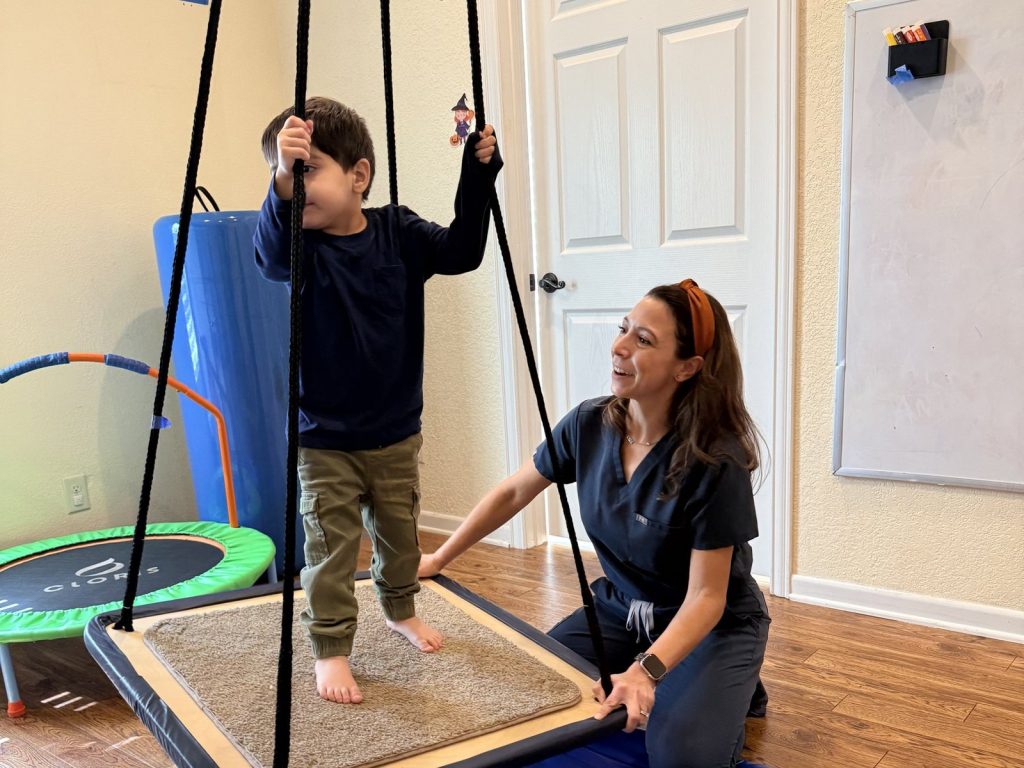
Our Approach to Occupational Therapy
At Crossroads Therapy Clinic, we recognize that a child’s ability to participate in everyday activities depends on many systems working together.
Sensory processing, postural control, motor coordination, emotional regulation, and the ability to engage with others can all influence how a child plays, learns, and develops independence.
Our occupational therapists use their specialized training and clinical experience to understand which areas may be affecting a child’s participation and determine where treatment should begin.
Specialized Approaches That Support Development
Sensory Integration and Sensory-Based Therapy
Some children have difficulty processing and responding to sensory information from their bodies and surroundings. Our therapists evaluate how these differences affect movement, attention, regulation, play, and daily activities, then develop individualized strategies to support more successful participation.
DIR/Floortime-Informed Therapy
Relationships, engagement, and emotional development are important parts of learning. DIR/Floortime-informed approaches emphasize following the child’s interests, building meaningful interactions, and supporting communication, emotional regulation, and developmental growth through play and relationships.
Neurodevelopmental Treatment (NDT)-Informed Therapy
For children with challenges involving posture, movement, muscle tone, or motor coordination, our therapists may incorporate NDT-informed handling and movement strategies to support functional motor skills and participation in everyday activities.
Connecting Therapy to Everyday Life
These approaches are not separate programs that every child follows. Our therapists select and combine strategies based on each child’s strengths, challenges, developmental needs, and response to treatment.
Our goal is not simply to improve performance during a therapy activity. It’s to help children use their developing skills during play, learning, self-care, and everyday routines.
When Might a Child Benefit From Occupational Therapy?
Children experience and interact with the world in different ways. For some, challenges with sensory processing, movement, regulation, or motor coordination can make everyday activities more difficult.
These challenges may affect how a child plays, learns, interacts with others, and participates in daily routines. Some signs that a child may benefit from occupational therapy include:
Sensory Processing Differences
A child may be unusually sensitive to sounds, touch, movement, clothing, or certain environments. Other children may seek additional movement, pressure, or sensory input to help them feel organized and engaged.
Emotional Regulation and Engagement
Some children have difficulty managing frustration, transitioning between activities, adapting to changes in routine, or remaining engaged in play and interactions with others.
Postural Control and Motor Coordination
A child may struggle with balance, body awareness, coordination, maintaining an upright posture, or organizing movements needed for play and daily activities.
Play and Developmental Skills
Some children have difficulty exploring toys, participating in reciprocal play, developing new play skills, or engaging in age-appropriate activities with others.
Fine Motor Skills and Visual-Motor Coordination
Challenges with manipulating toys, using utensils, drawing, handwriting, or coordinating hand movements may affect a child’s ability to participate in learning and daily activities.
Self-Care and Daily Routines
Tasks such as dressing, grooming, bathing, mealtimes, and other everyday routines may be difficult because of sensory, motor, or developmental challenges.
Looking Beyond the Behavior
A child who avoids certain activities, struggles with transitions, or has difficulty sitting and participating may be experiencing challenges that aren’t immediately obvious.
Rather than focusing only on the behavior we see, our therapists work to understand the sensory, motor, developmental, and environmental factors that may be contributing to the difficulty.
Our goal is to understand what is making participation difficult and help the child develop the skills and supports needed for greater success in everyday life.
How We Evaluate Occupational Therapy Needs at Crossroads
Every occupational therapy evaluation begins with understanding the child and the family’s concerns.
We want to know what everyday life looks like. Does the child struggle with transitions or certain sensory experiences? Are there concerns about movement, coordination, play, or emotional regulation? Which activities are difficult at home, at school, or in other environments?
Parents and caregivers provide valuable information about how their child functions outside the clinic, and their observations are an important part of our evaluation process.
Looking at the Whole Child
Our occupational therapists use a combination of clinical observation, family interviews, developmental assessment, and standardized testing when appropriate.
We observe how a child moves, plays, explores, responds to sensory experiences, and interacts with people and their environment.
Depending on the child’s needs, we may evaluate:
- Sensory processing and responses to sensory input
- Emotional regulation, engagement, and participation
- Postural control, balance, and body awareness
- Motor planning and coordination
- Play skills and developmental abilities
- Fine motor and visual-motor skills
- Independence with daily routines and self-care
We also look at how these areas interact. For example, a child who has difficulty participating in seated activities may be experiencing challenges with postural control, sensory processing, attention, or a combination of factors.
Understanding What Helps
One of the most valuable parts of an evaluation is observing how a child responds when we change the activity, environment, or level of support.
Does movement help the child become more engaged? Does additional postural support improve participation? Does adjusting sensory input make an activity more comfortable or manageable?
These observations help us identify the child’s strengths, understand potential barriers, and determine which strategies may be useful in treatment.
Our goal is not simply to identify areas of delay. It is to understand what is limiting a child’s participation and develop an individualized treatment plan that helps them succeed in everyday life.
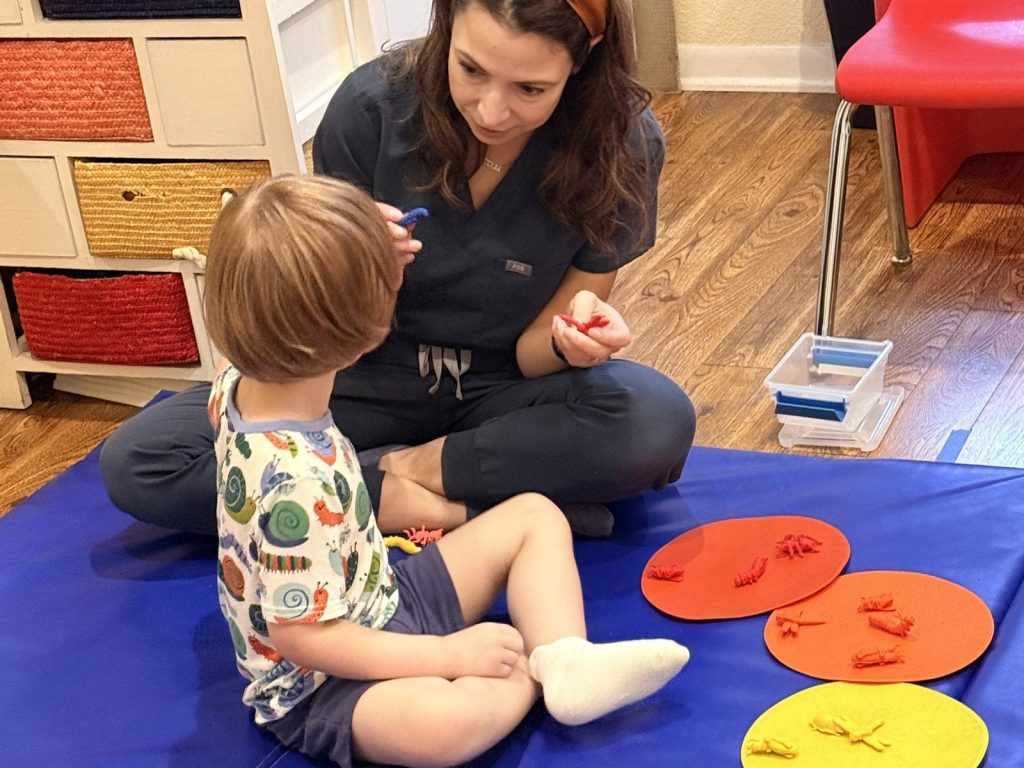
Individualized Occupational Therapy: Building Skills Through Regulation and Engagement
At Crossroads Therapy Clinic, we recognize that children learn best when they feel supported, connected, and able to participate in the activities around them.
For some children, challenges with sensory processing, emotional regulation, or motor development can make it difficult to engage in play, interact with others, or participate in everyday routines.
Before expecting a child to perform a new skill, we consider what they may need to become more comfortable, organized, and engaged.
Our first question isn’t simply what activity a child needs to learn, but what may be preventing that child from participating successfully.
These are interconnected processes, not rigid stages.
Regulation and Connection Come First
Our occupational therapists often begin by building a relationship with the child and identifying the sensory experiences, movement opportunities, and interactions that support regulation and engagement.
Using individualized sensory-based activities and DIR/Floortime-informed strategies, we follow the child’s interests, encourage meaningful interactions, and create opportunities for shared attention, communication, and purposeful play.
Rather than expecting every child to participate in a predetermined sequence of activities, we adjust our approach based on how the child responds.
Building Motor Skills Through Meaningful Movement
As children become more engaged, therapy may incorporate activities targeting postural control, body awareness, balance, motor planning, coordination, and fine motor development.
Our therapists may use NDT-informed movement strategies, guided practice, environmental adaptations, and play-based activities to help children develop the motor skills needed for greater independence.
For some children, sensory regulation and motor development are addressed together within the same activity.
A child might practice postural control while reaching for a favorite toy, develop coordination through movement-based play, or work on motor planning while navigating a simple obstacle course.
Connecting Therapy to Everyday Function
The goal is not simply to help a child complete an activity in the therapy room.
We want developing skills to carry over into everyday experiences—participating in family routines, playing with peers, managing transitions, engaging in learning activities, and becoming more independent with self-care.
We continually observe how the child responds, adjust the level of support, and work with families to identify strategies that are meaningful and practical outside the clinic.
Regulation supports engagement. Engagement creates opportunities for learning. And learning becomes meaningful when children can use their skills in everyday life.
Supporting Progress Beyond the Therapy Room
Some of the most meaningful opportunities for a child’s development happen outside the therapy room—during playtime, family routines, mealtimes, and everyday interactions.
At Crossroads Therapy Clinic, we believe that helping families understand their child’s needs is just as important as the work we do during therapy sessions.
Our occupational therapists work closely with parents and caregivers to help them recognize their child’s sensory and regulation needs, understand what may be contributing to challenging situations, and identify strategies that support successful participation.
Helping Families Understand Their Child
We help parents recognize their child’s cues, identify sensory experiences that may be overwhelming or helpful, and understand how regulation, movement, and engagement influence everyday activities.
Sometimes small changes in the environment, expectations, or the way an activity is presented can make a meaningful difference.
Practical Strategies for Everyday Life
When appropriate, we provide individualized home activities to help children practice developing skills.
These may include movement and sensory-based activities, play routines that encourage engagement and interaction, exercises that support motor coordination, or strategies that make dressing, grooming, and other daily activities more manageable.
We work with families to identify what is realistic for their schedules and their child’s individual needs.
Our goal isn’t to give families more work.
It’s to help them understand their child and make everyday experiences more successful.
We also recognize that progress doesn’t always happen in a straight line. As children grow and their needs change, we adjust recommendations and collaborate with families and other professionals involved in their care.
Ultimately, we want the skills children develop in therapy to become part of their everyday lives—helping them participate more comfortably, confidently, and independently at home, at school, and in their communities.
Therapy provides opportunities to develop skills. Everyday experiences help those skills become meaningful.