What Is Childhood Apraxia of Speech?
Childhood Apraxia of Speech (CAS) is a neurological motor speech disorder that affects a child’s ability to plan and program the movements needed for speech.
A child with CAS often knows what they want to say but has difficulty getting their mouth to produce the sounds and movement sequences needed to say it. The challenge is not simply knowing how to make individual sounds. It is coordinating the movements of the jaw, lips, and tongue with the timing and sequencing required for speech.
A child may be able to produce a sound or word successfully one time but struggle to repeat it consistently. As words become longer or more complex, speech may become increasingly difficult.
CAS is not caused by muscle weakness, although some children may have additional motor or structural challenges that affect speech production.
What Does Childhood Apraxia of Speech Look Like?
Children with CAS may have difficulty producing speech sounds consistently and moving smoothly from one sound or syllable to another. The characteristics can vary considerably from one child to another.
Some common signs include:
- Inconsistent speech production: A child may say the same word differently each time they attempt it.
- Difficulty sequencing sounds and syllables: Moving from one sound to the next may be challenging, especially as words become longer.
- Disrupted speech rhythm: Speech may have unusual stress patterns, pauses, or difficulty maintaining a natural rhythm.
- Difficulty imitating speech: A child may struggle to repeat sounds or words, even when provided with a model.
- Limited sound combinations: Some children may use a small number of consonants and vowels or have difficulty combining them into syllables and words.
- Increased difficulty with longer words: A child may produce a simple word successfully but struggle when additional syllables or more complex movement patterns are required.
Not every child with CAS demonstrates all of these characteristics. Some of these signs can also occur with other speech sound or motor speech disorders, which is why a comprehensive evaluation is important.
At Crossroads, we recognize that difficulties with speech movement do not always indicate apraxia. Understanding why a child is struggling is an important part of determining the most appropriate treatment.
The Diagnosis Is Only Part of the Picture
It would be nice if every child fit neatly into one diagnostic category, but that’s often not what we see.
Some children with Childhood Apraxia of Speech (CAS) also have muscle weakness or difficulties with motor execution. Others have additional diagnoses, such as autism or Down syndrome, that can affect how they learn, respond to cues, and participate in therapy. Some children have a combination of challenges that make speech development even more complex.
These overlapping difficulties matter because not every child with CAS is ready to begin with the same treatment activities.
A child may need help establishing foundational movement patterns, coordinating airflow and voice, developing greater awareness of oral movements, or learning how to respond to different types of support before they can participate successfully in more complex speech practice.
At Crossroads, we don’t want to focus only on the diagnosis. We want to understand what is preventing the child from being successful and what skills or supports may need to be established first.
Sometimes that means taking a different path to reach the same goal.
As those foundational skills develop, we use principles of motor learning to guide practice, build consistency, reduce support, and help children move toward more independent, functional speech.
How We Evaluate Childhood Apraxia of Speech
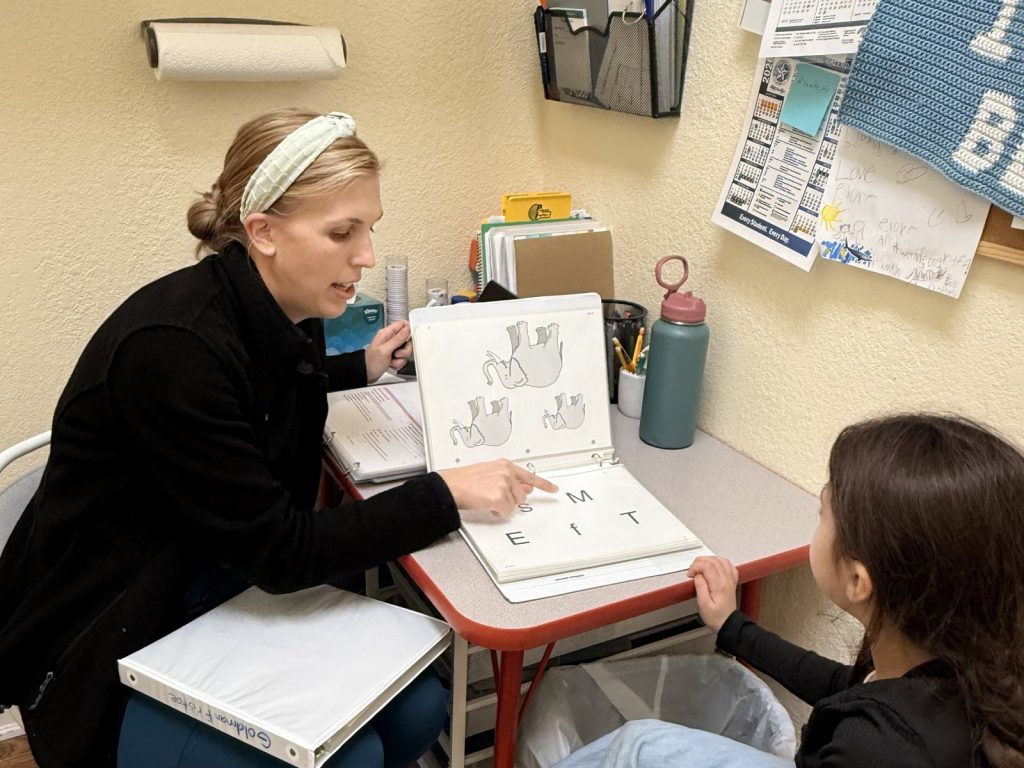
At Crossroads Therapy Clinic, our evaluation goes beyond identifying speech errors or determining whether a child has CAS. We want to understand why a child is struggling and what may be limiting their ability to produce speech successfully.
We look at how a child plans, coordinates, and sequences speech movements, but we also consider other systems that may be affecting speech production. This may include muscle strength and control, jaw and tongue movement, respiratory support, voicing, sensory-motor awareness, and structural differences.
We also pay close attention to how a child responds to different types of support. Can they produce a sound with a verbal model? Does visual or tactile cueing improve their accuracy? Can they maintain the movement or sequence when that support is reduced?
These responses provide valuable information about the child’s current abilities and help us identify where treatment should begin.
For children with additional diagnoses or more complex motor challenges, we consider how those differences may affect participation, learning, and speech development.
Our goal is not simply to identify the diagnosis. It is to understand the child well enough to develop an individualized treatment plan that builds on existing skills and addresses the barriers limiting progress.
Individualized Treatment: Finding the Right Place to Begin
At Crossroads Therapy Clinic, we recognize that children with Childhood Apraxia of Speech do not all learn to speak in the same way or respond to the same treatment techniques.
For some children, established motor speech treatment approaches may be an appropriate place to begin. Others, particularly those with additional motor, sensory, or developmental challenges, may need a different starting point or additional support to participate successfully in speech practice.
Our first question is not simply which treatment technique to use, but what is preventing this child from being successful?
This is where our clinical reasoning becomes especially important.
We may identify difficulties with jaw stability, lip or tongue control, coordination of airflow and voice, or a child’s ability to recognize and reproduce specific movements. These findings help us determine what needs to be addressed and which types of support may be useful.
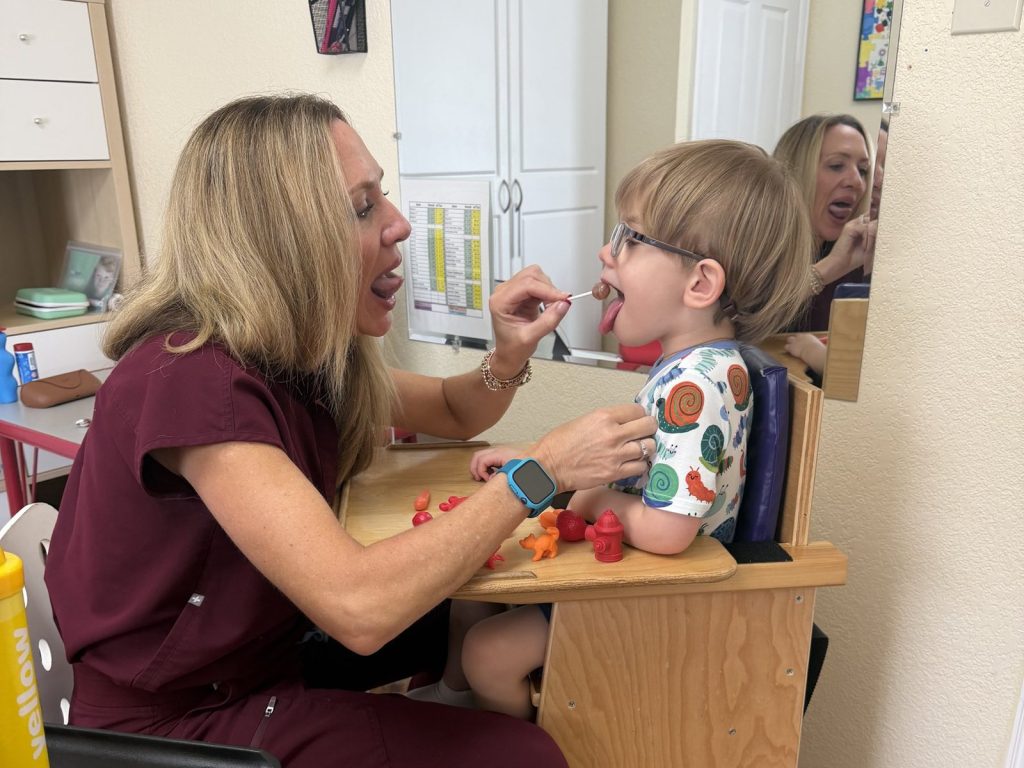
For some children, we incorporate Oral Placement Therapy (OPT), tactile cues, and specialized tools to help establish awareness, control, or coordination of specific movements. These are not activities we use simply because a child has a diagnosis of CAS. They are selected based on the individual child’s needs and the specific skill we are trying to develop.
A tool is a step in the learning process, not the goal of treatment.
When tools or preparatory activities are used, we continually assess how the skills being practiced relate to speech and whether they are helping the child move toward successful speech production. As the child becomes more independent, we work to reduce external support and increase opportunities for direct speech practice.
Throughout treatment, we apply principles of motor learning to guide how skills are practiced and acquired. This includes selecting appropriate targets, providing meaningful repetition, adjusting cues and feedback, and gradually increasing the complexity of speech movements and sequences.
Our goal is to help children move from supported learning toward independent, functional communication.
We don’t expect every child to follow the same path. We work to understand where each child needs to begin and how to help them progress.
Supporting Progress Beyond the Therapy Room
Learning to speak requires practice, repetition, and consistency. For children with Childhood Apraxia of Speech, the movements needed for speech often require many opportunities for practice before they become more accurate, consistent, and automatic.
Coming to therapy once a week is not enough by itself. What happens between therapy sessions is an important part of the learning process.
Therapy is where we teach the skill.
Everyday practice is where we help it grow.
At Crossroads Therapy Clinic, we believe successful treatment is a collaborative effort between the therapist, child, and family. Our role is to identify the skills that need to be developed, determine how to teach them, and help families understand how to support that learning at home.
Home practice does not mean asking parents to become therapists. It means helping families recognize what their child is working toward, understand which cues are helpful, and create opportunities for meaningful practice throughout the week.
For children with CAS and additional diagnoses, such as autism, Down syndrome, or other motor and developmental challenges, this collaboration becomes especially important. These children may require more individualized support, additional repetition, and coordination among multiple therapists, caregivers, and educational professionals.
We work with families to establish realistic, manageable practice activities that match the child’s current abilities. As skills develop, home practice changes to support the next stage of learning.
We also recognize that spoken language may not be a child’s only means of communication. Gestures, signs, and augmentative and alternative communication (AAC) may be incorporated to support functional communication while speech skills continue to develop.
Progress happens when we work together—building skills in therapy, practicing them at home, and helping children use those skills in everyday life.